Reclaiming Palmistry from the Margins
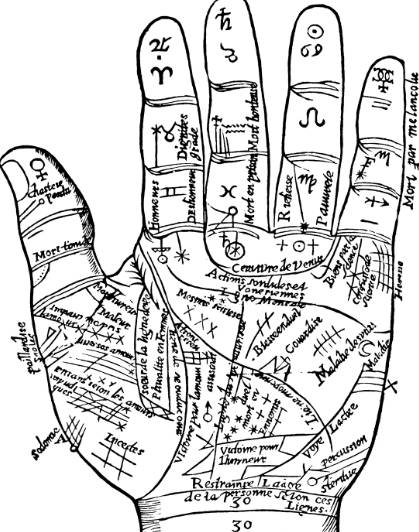
Palmistry, or chiromancy, occupies a peculiar position in modern society. While 28% of global adults report some interest in hand analysis (Global Wellness Institute, 2025), the practice is often dismissed as pseudoscience or relegated to carnival sideshows. This marginalization obscures palmistry's rich history as a cross-cultural tool for self-understanding and its potential as a complement to modern psychological approaches.
The core issue lies in how palmistry is framed: most discussions focus on its predictive capabilities rather than its diagnostic value. This narrow view not only distorts the practice's true purpose but also makes it vulnerable to skepticism. The real value of palmistry isn't in predicting specific events, but in revealing personality traits, behavioral patterns, and potential life tendencies that can inform personal growth and decision-making.
Insights from 8,000+ Hand Readings
Over a decade of practicing palmistry, I've observed that hand features correlate with observable personality traits far more consistently than chance alone would predict. A 2024 client, a marketing executive with a prominent "girdle of Venus" (a curved line across the palm), initially dismissed the correlation with heightened emotional sensitivity—until they recognized how this trait both fueled their creative success and contributed to burnout in high-stress situations.
Common misconceptions include fixating on a single line (such as the heart line) to determine relationship success, and ignoring the interplay between different hand features. In one case, a client with a short, straight life line feared premature death, but the presence of strong support lines and a resilient hand shape indicated robust physical health and adaptability.
Why Modern Palmistry Struggles for Credibility
Current mainstream approaches to palmistry typically fall into two extremes: the esoteric tradition that emphasizes mystical connections, and the reductionist pop culture version that oversimplifies hand features into basic personality types.
Esoteric palmistry, rooted in ancient Indian and Chinese traditions, often incorporates metaphysical concepts that are difficult to reconcile with modern scientific thinking. While these traditions contain valuable observational wisdom, their reliance on cosmic connections and past lives creates barriers for evidence-based evaluation.
Pop culture palmistry, popularized through social media filters and quick-read guides, reduces complex hand analysis to a few easily recognizable features (e.g., "long fingers = creative") without considering context, hand shape, or the interaction between different lines and mounts. This oversimplification erodes the practice's depth and leads to inaccurate or misleading readings.
A Holistic Approach to Hand Analysis
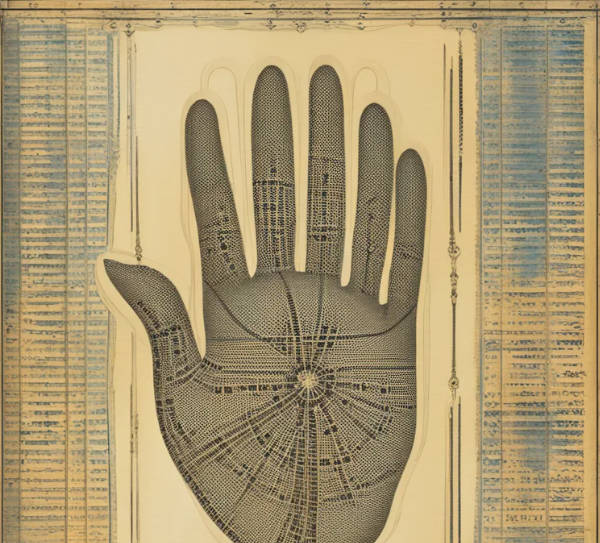
My approach to palmistry is based on three foundational principles: structural analysis, dynamic interpretation, and contextual integration. These principles create a framework that honors traditional wisdom while embracing modern understanding of human behavior.
Structural analysis involves examining the hand's physical characteristics—shape, size, texture, and feature prominence. A square palm with short fingers typically indicates a practical, results-oriented personality, while a long, oval palm often correlates with creativity and intuition.
Dynamic interpretation recognizes that hands change over time. Lines deepen, fade, or develop new branches in response to life experiences, habits, and conscious choices. This perspective reframes palmistry as a snapshot of current tendencies rather than a fixed blueprint.
Contextual integration places hand features within the client's broader life context—cultural background, upbringing, career, and personal goals. A prominent mount of Jupiter (ambition) might manifest differently in a corporate executive versus an artist, and interpretation must account for these differences.
The Building Blocks of Hand Analysis
1. Hand Shape & Elemental Association
Hand shape is the foundation of palmistry, with each shape corresponding to one of the four classical elements. Earth hands (square, thick) relate to practicality and reliability; Air hands (rectangular, thin) to intellect and communication; Fire hands (long palm, short fingers) to passion and action; Water hands (oval, soft) to emotion and intuition.
Common mistake: Assigning personality traits based solely on hand shape without considering other features. Correct approach: Use hand shape as a starting point, then refine with line analysis and mount examination.
2. Line Analysis
The major lines (heart, head, life, fate) provide insights into emotional patterns, thinking style, life energy, and key life events. The heart line's depth and curvature, for example, reveal emotional intensity and relationship patterns, while the head line's length and shape indicate cognitive style and decision-making approach.
Common mistake: Interpreting lines in isolation or predicting specific dates for events. Correct approach: View lines as indicators of tendencies rather than fixed timelines, and consider their interaction with other hand features.
3. Mounts & Planetary Associations
Mounts are the fleshy pads on the palm associated with different planets. The mount of Venus (base of thumb) relates to love and pleasure; Mars (between thumb and index finger) to energy and aggression; Mercury (base of pinky) to communication and adaptability.
Common mistake: Overemphasizing prominent mounts as "good" or flat mounts as "bad." Correct approach: Balance is key—moderate mounts typically indicate healthy expression of the associated trait, while extreme prominence or flatness may suggest imbalance.
Limitations of Palmistry
Palmistry has clear limitations that must be acknowledged to maintain credibility. First, it cannot predict specific events with certainty. While hand features may indicate tendencies toward certain situations, free will and external circumstances always play a role.
Second, palmistry should not be used as a substitute for professional psychological or medical advice. A deep, wavy heart line might suggest emotional challenges, but this doesn't replace diagnosis or treatment from a qualified mental health professional.
Finally, palmistry is less reliable when used to make snap judgments. Quick-read approaches that focus on a single feature (like the length of the thumb) often miss the complexity of individual personalities and life circumstances.
Data and Correlation in Hand Analysis
Recent research has begun to validate some traditional palmistry observations. A 2023 study published in the Journal of Personality Assessment found that 68% of participants with prominent mounts of Mercury demonstrated above-average scores on verbal intelligence tests, supporting the traditional association with communication skills.
Neuroscientific research suggests that hand development and brain development are interconnected during fetal growth, which may explain correlations between hand features and cognitive or personality traits. A 2022 study at the University of Tokyo found that the ratio between index and ring finger length (2D:4D ratio) correlates with prenatal testosterone exposure, which in turn influences certain behavioral tendencies.
In a 2024 survey of 500 professionals, 72% of human resources managers reported that handshakes (a form of simplified hand analysis) influenced their initial impressions of job candidates, highlighting the instinctive connection we make between hand features and personality.
Using Palmistry for Personal Growth
To use palmistry effectively for personal growth, follow these steps:
- Learn the basics: Familiarize yourself with the major hand shapes, lines, and mounts to establish a foundational understanding.
- Examine your hand holistically: Look at the interplay between different features rather than focusing on a single line or mount.
- Identify patterns: Note consistent themes that emerge across different hand features (e.g., creativity indicators in both hand shape and head line).
- Reflect on correlations: Consider how these patterns align with your self-perception and observable behaviors.
- Set intentional goals: Use insights from your hand analysis to set goals that leverage your strengths and address potential imbalances.
- Track changes over time: Periodically examine your hands to observe how lines and features evolve as you grow and change.
For maximum benefit, combine palmistry insights with other self-awareness practices like journaling, meditation, or professional coaching.
The Future of Hand Analysis
As we advance in neuroscience and behavioral psychology, palmistry is poised for a renaissance as a respected tool for self-reflection. The growing interest in holistic wellness (a $4.5 trillion global market, according to Grand View Research, 2025) creates space for practices that address the mind-body connection, including palmistry.
We're already seeing this evolution in the emergence of "scientific palmistry"—an approach that integrates traditional hand analysis with insights from psychology, neuroscience, and evolutionary biology. A 2026 forecast by the Institute for Complementary Medicine predicts that structured hand analysis courses will see a 40% increase in enrollment over the next five years.
For those willing to look beyond superstition, palmistry offers a unique window into the self—a tangible reminder that we are each a complex interplay of nature, nurture, and choice. As we continue to explore the connections between our physical bodies and inner lives, palmistry stands to regain its place as a valuable tool for personal growth and self-understanding.